Stockpile concerns push the defense establishment to rely on less advanced systems, with mixed results.
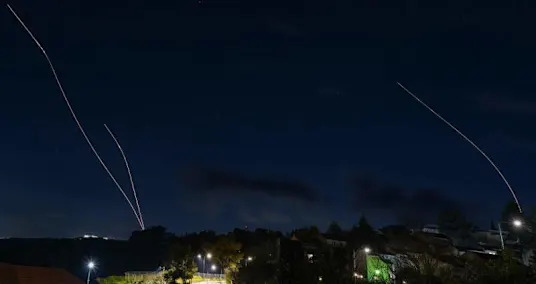
Israel has begun limiting its use of its most advanced missile interceptors as ongoing Iranian barrages strain stockpiles, forcing the military to increasingly rely on upgraded but less capable systems, according to a Wall Street Journal report published Friday.
The shift comes as the war enters its fourth week, with Iran continuing near-daily launches of ballistic missiles and drones. In recent days, two Iranian missiles struck the southern cities of Dimona and Arad after interception attempts using modified, lower-tier systems failed.
Israeli air defenses, long regarded as among the most sophisticated in the world, have until now leaned heavily on the Arrow system to counter long-range ballistic threats. However, officials are now conserving these high-end interceptors, turning instead to enhanced versions of David’s Sling and even Iron Dome for threats they were not originally designed to handle.
The move reflects mounting pressure on military inventories, as both Israel and its allies contend with the high cost and slow production pace of advanced interceptors compared to Iran’s mass-produced missiles and drones.

Military planners must weigh each incoming threat carefully
“The number of interceptors of every type is finite,” Tal Inbar of the Missile Defense Advocacy Alliance said, noting that prolonged conflict forces increasingly difficult decisions about when and how to deploy defensive systems.
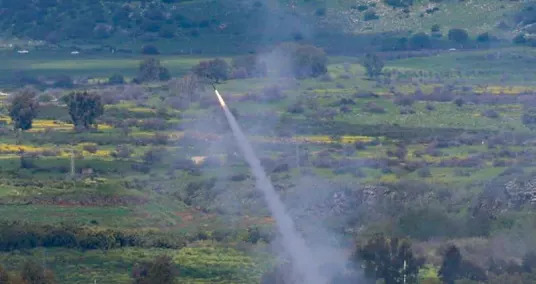
Since the start of the war, Iran has launched more than 400 missiles alongside hundreds of drones. While the intensity of attacks has decreased from the initial phase, the steady pace, combined with daily fire from Hezbollah, continues to stretch Israel’s layered air-defense network.
Military planners must weigh each incoming threat carefully, deciding whether interception is necessary and which system to deploy, while preserving capabilities for future scenarios. Israel’s multi-tiered defense structure, ranging from Iron Dome for short-range threats to Arrow 3 for exo-atmospheric interceptions, was designed for flexibility, but not for sustained high-volume warfare over extended periods.
Recent efforts to adapt lower-tier systems have included software upgrades and expanded operational parameters. David’s Sling, for example, has been pushed to intercept longer-range ballistic threats, with uneven success. Iron Dome has also been adapted to engage drones and longer-range projectiles.
Still, the limitations of these adjustments were underscored by the direct hits in Dimona, home to Israel’s main nuclear facility, and Arad, incidents that heightened public concern and prompted some residents to relocate to reinforced shelters.
NEUESTE BEITRÄGE
- 1
 April full moon 2026 dazzles as 'Pink Moon' lights up skies worldwide (photos)02.04.2026
 - 2UN rights chief says Israeli policy in West Bank 'resembles apartheid system'07.01.2026
- 3Instructions to Investigate Different Open Record Extra Offers Actually19.10.2023
- 4Manual for Instructive Application for Youngsters01.01.1
- 5French Senate debates social media ban for under-15s31.03.2026
- 62025 Was Another Exceptionally Hot Year29.12.2025
- 7‘Inoculation’ helps people spot political deepfakes, study finds28.03.2026
- 8Simple Consideration Plants for Home and Office: An Aide06.06.2024
- 9Whale stranded off Germany for days free again28.03.2026
- 10PA accuses Israel of 'human trafficking' after planeload of Gazans arrives in South Africa16.11.2025
- 11Sound Maturing: Wellbeing Tips for Each Life Stage01.01.1
- 12Artemis II astronauts arrive at Florida launch site for first moon trip in 53 years27.03.2026
- 13Josh Duhamel's secret to the good life at 53? Wolverine peptides, ditching Hollywood and having another baby.07.04.2026
- 14Vote In favor of Your Favored Shimmering Water05.06.2024
- 15Katz, IDF: We assassinated IRGC intelligence chief Majid Khademi06.04.2026














Ähnliche Artikel
- Artemis 2 captures historic 'Earthset' photo | Space photo of the day for April 7, 202607.04.2026
- Tesla Germany Registrations Quadruple to 9,252 Vehicles in Best March Ever07.04.2026
- What's going on with Katseye? The Manon Bannerman hiatus drama, explained.07.04.2026
- Two IDF officers, civilian face indictment in alleged Gaza aid-truck smuggling scheme07.04.2026
- West Palm Beach Shorecrest, renderings of downtown waterfront condo07.04.2026
- Artemis II astronauts make long-distance call to the space station as they head home from the moon07.04.2026
- Tuesday, April 7. Russia’s War On Ukraine: News And Information From Ukraine07.04.2026
- The Eastern Bongo, Kenya’s Rare Forest Antelope on the Brink07.04.2026
- U.K. blocks Kanye West from entering Britain to headline now canceled festival: What led to the ban07.04.2026
- Russia confirms 16 Cameroonian soldiers killed in Ukraine war07.04.2026
- First Phosphate advances battery-grade phosphate project as analysts highlight strategic Federal support07.04.2026
- After fleeing past Hezbollah fighting, some Israelis on northern border vow to stay07.04.2026
- 'Unreal' solar eclipse: Artemis 2 crew just saw one of the rarest sights in spaceflight history07.04.2026
- Chinese construction workers in Israel: 'I’d rather be bombed than live in poverty'07.04.2026
- Broken toilet, T-shirts on windows and collecting saliva: The weirdness of daily life aboard Orion07.04.2026
- Czech Republic caps fuel prices amid Iran war energy crisis07.04.2026
- NASA releases stunning new images captured by the Artemis II moon mission, including 'Earthset' and a solar eclipse from space07.04.2026
- Amid Iran war, 53 of Israel's future scientists showcase projects in Jerusalem contest07.04.2026
- Iranian-linked drone attack kills Kurdish couple in northern Iraq07.04.2026
- Thousands of small fish defy gravity to climb Congo waterfall07.04.2026